

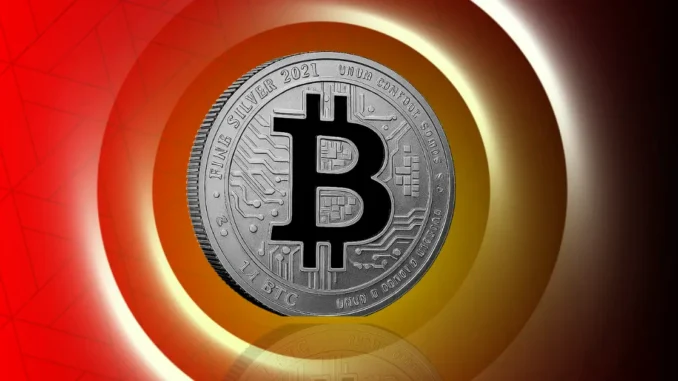

According to Deutsche Bank reports, Bitcoin could soon rival gold as one of the primary assets held by central banks by 2030. The global financial institution believes the growing institutional adoption of digital assets and a gradual global move away from U.S. dollar dependency may encourage central banks to diversify their reserves with cryptocurrencies like Bitcoin.
According to Bloomberg, which first shared details of the report, Deutsche Bank analysts said:
“Bitcoin may evolve into a key component of central bank reserves, serving a role similar to gold in the 20th century as a store of value and hedge against inflation.”
Bitcoin and Gold Could Work Together
The report highlights that Bitcoin’s role in the future may mirror gold’s position in the 20th century, when the precious metal served as the foundation of global finance and a safeguard during periods of economic instability.
Deutsche Bank’s analysts noted that Bitcoin could act as a modern hedge against inflation and currency depreciation, offering a new layer of protection for reserve portfolios. However, they emphasized that Bitcoin is unlikely to replace the U.S. dollar, but rather complement it within a diversified reserve structure.

Currently, central banks worldwide hold over 36,000 tons of gold, reinforcing their preference for assets that preserve value in uncertain times. The report suggests that a similar trend of diversification could extend to digital currencies, signaling a major shift in traditional financial strategies.
Central Banks Eye Digital Transformation
Deutsche Bank’s study also highlights how financial institutions are rapidly adapting to the digital era, exploring ways to integrate blockchain-based assets into their operations. With increasing interest in Bitcoin ETFs and tokenized assets, central banks may soon include digital assets as part of their official reserves.
If realized, this move would strengthen Bitcoin’s credibility and global reach, while giving central banks greater influence over the evolution of the crypto market.
However, Deutsche Bank warned that this transformation will require clear regulations, standardized frameworks, and global cooperation to manage potential risks. The report states that regulatory clarity will be a key factor in determining how fast digital assets become part of central bank portfolios.
Analysts further noted that if central banks start accumulating Bitcoin, it could trigger a surge in institutional demand, potentially driving Bitcoin’s price to new highs.
Bitcoin’s Strong Market Performance
As of October 10, 2025, Bitcoin (BTC) is trading around $121,800, with a 58.5% dominance in the crypto market and a 9.4% monthly gain. This steady performance reinforces investor confidence despite macroeconomic uncertainty.
While opinions remain divided, some experts see Deutsche Bank’s forecast as a natural evolution in global finance, while others remain cautious about volatility. The prospect of Bitcoin joining central bank reserves represents a potential turning point for digital assets.
If Deutsche Bank’s prediction materializes, Bitcoin could transition from a speculative investment to a recognized pillar of global financial stability, standing beside gold as one of the world’s most trusted stores of value.
Trust with CoinPedia:
CoinPedia has been delivering accurate and timely cryptocurrency and blockchain updates since 2017. All content is created by our expert panel of analysts and journalists, following strict Editorial Guidelines based on E-E-A-T (Experience, Expertise, Authoritativeness, Trustworthiness). Every article is fact-checked against reputable sources to ensure accuracy, transparency, and reliability. Our review policy guarantees unbiased evaluations when recommending exchanges, platforms, or tools. We strive to provide timely updates about everything crypto & blockchain, right from startups to industry majors.
Investment Disclaimer:
All opinions and insights shared represent the author’s own views on current market conditions. Please do your own research before making investment decisions. Neither the writer nor the publication assumes responsibility for your financial choices.
Sponsored and Advertisements:
Sponsored content and affiliate links may appear on our site. Advertisements are marked clearly, and our editorial content remains entirely independent from our ad partners.



Be the first to comment